You swapped the chips for salads, started a morning smoothie, and stocked up on lentils and protein bars. You did everything right. So why do your jeans feel tight by lunchtime?
If that sounds familiar, you’re not doing anything wrong. Bloated after eating healthy change is common, and it doesn’t mean your new habits are a mistake. Your gut may just need time. Still, if the bloating keeps coming back, gets worse, or arrives with pain or other changes, it’s worth talking to a doctor. Below, we’ll walk through both sides of that line.
When “Doing Everything Right” Still Feels Wrong
Picture someone who gives up fast food and starts eating big salads, lentil soup, protein bars, and a spinach-and-apple smoothie. Within weeks, she feels gassy and uncomfortable after meals and is sure she’s doing something wrong. She isn’t. In many cases, the gut simply needs time to adapt, and part of our role is helping people tell the difference between a body that is adjusting and one that needs a closer look.
The reason often comes down to fiber and a group of fermentable carbohydrates called FODMAPs. Both can pass through the small intestine only partly digested. When they reach the colon, bacteria ferment them, and gas is the byproduct. That’s why a sudden jump in fiber, even from wonderful foods, can leave your gut bacteria struggling to keep up.
The Healthy Foods Most Likely to Cause Trouble
Healthy and easy to digest aren’t always the same thing. Some of the usual suspects are:
- Fiber. Good for your heart, blood sugar, and regularity, but a quick increase may leave your gut bacteria struggling to keep up.
- FODMAP-rich foods. Onions, garlic, cauliflower, mushrooms, apples, pears, beans, lentils, milk, and larger amounts of wheat can trigger gas in some people, especially those with sensitive digestion. Not everyone reacts to them.
- Sugar alcohols. Sorbitol, xylitol, and maltitol, found in many protein bars and sugar-free snacks, are poorly absorbed and may cause gas or loose stools. Checking labels helps.
- Raw vegetables. Kale, broccoli, and cabbage often feel gentler when cooked, especially compared with a big salad eaten quickly.
Everyday Causes That Are Easy to Miss
If you’re still bloated after eating healthy, the culprit may not be on your plate at all.
How you eat matters. Eating quickly, chewing gum, sipping sparkling water, and drinking through a straw all lead you to swallow extra air. A gentle walk after meals is a simple habit many people find helpful.
Constipation is another easy one to miss. When stool moves slowly, gas can get trapped behind it. If you’ve added fiber but aren’t going regularly, or never feel fully empty, that may be part of the picture.
Medications can play a role too. GLP-1 medicines such as semaglutide and tirzepatide, metformin, iron supplements, opioid pain medications, and antibiotics can cause bloating, nausea, or slower stomach emptying in some people. If your symptoms began after a new prescription, talk with your prescribing clinician rather than stopping it on your own.
Telling Normal Bloating From Something More
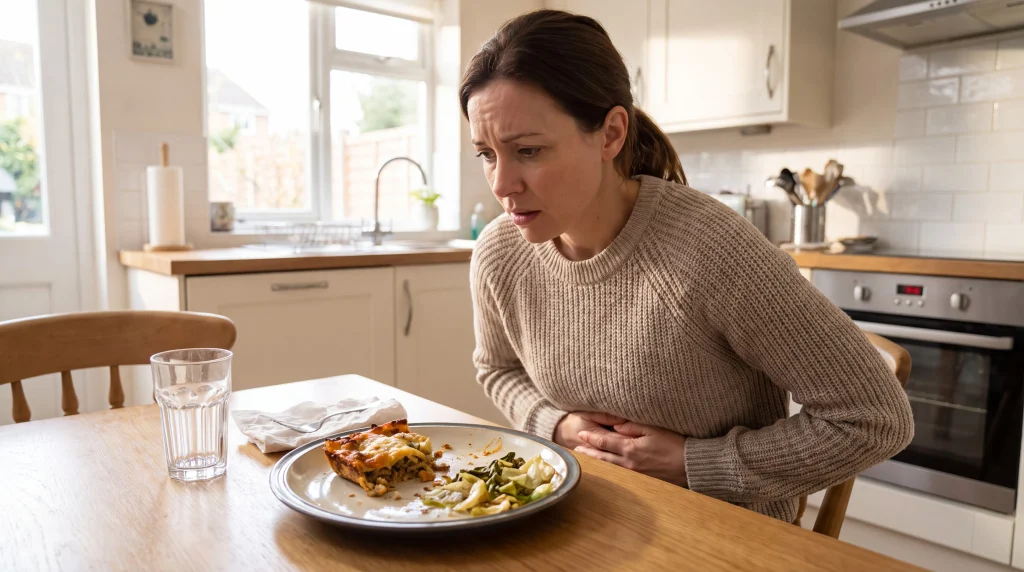
Occasional bloating usually follows a large meal, a sudden jump in fiber, or a rushed lunch. Most of the time, feeling bloated after eating healthy settles within a few hours, often by the end of the afternoon. If that’s all you’re dealing with, you’re fine.
Persistent bloating looks different. It happens most days, lasts for weeks, keeps getting worse, or comes with pain, weight loss, bleeding, or changes in bowel habits. That pattern is worth evaluating, and it’s nothing to feel embarrassed about.
If you’ve adjusted your habits and still feel bloated regularly, there may be an underlying condition. These are things for a clinician to evaluate, not for self-diagnosis:
- IBS: a gut that is more sensitive to normal amounts of gas, sometimes with cramping and bowel changes
- Lactose intolerance: bloating and loose stools after dairy
- SIBO (small intestinal bacterial overgrowth): bloating that may appear soon after meals
- Celiac disease: an immune reaction to gluten. If you suspect it, keep eating gluten until you’ve been tested, because going gluten-free first can affect results
- Gastritis: stomach lining irritation, which can cause upper abdominal fullness
- Gastroparesis: feeling full quickly or for a long time after eating
Easing Bloating Gently, Starting Today
For mild symptoms, small, steady changes over a few weeks are often the kindest place to start. Add one high-fiber food at a time rather than overhauling everything at once. Cook your vegetables instead of eating them raw, rinse canned beans well, and begin with small portions of lentils. Slow down, pause between bites, and drink plenty of plain water as your fiber intake grows.
If you want relief in the moment, a short walk, skipping carbonated drinks, and over-the-counter simethicone help some people. Peppermint tea may also help, though it can worsen heartburn or reflux.
It’s also worth keeping a simple food and symptom diary, noting what you ate and how you felt a few hours later. If symptoms continue, bring it to your appointment. It’s one of the most useful tools we have.
One caution: speak with a clinician or dietitian before starting a low-FODMAP diet. It can help some people with IBS, but it’s designed to be temporary, and restricting many foods for too long may affect nutrition and gut health.
When to See a Doctor for Bloating
Occasional bloating after a big meal is common. But if you stay bloated after eating healthy most days, please don’t wait to reach out if you notice any of the following:
- Bloating that happens most days and continues for several weeks
- Unexplained weight loss
- Blood in the stool, or black, tarry stools
- Ongoing vomiting, or feeling full after only a few bites
- Severe or worsening abdominal pain
- Difficulty swallowing
- A noticeable change in bowel habits, particularly as you get older
- Persistent bloating with pelvic pain or early fullness
- A family history of colon cancer, celiac disease, or inflammatory bowel disease
Seek emergency care or call 911 for sudden severe abdominal pain, a hard swollen belly, or if you’re unable to pass gas or stool.
Not sure whether what you’re feeling is normal? That’s exactly what our visits are for. Book an appointment and we’ll sort it out together.
How We Find the Root Cause of Your Bloating
We help patients who are bloated after eating healthy find the underlying cause. Tell us what you’re eating, which medications you take, and when the bloating tends to show up. From there, we recommend only the tests that make sense for you, which may include breath tests, blood or stool tests, an upper endoscopy, or a colonoscopy. Care might involve dietary changes, a short course of medication, or a longer-term plan for conditions like IBS. Many people notice improvement over time, though some conditions are managed rather than cured.
Get Checked for Bloating Near You in Illinois
If you’re still bloated after eating healthy, you don’t have to live with a belly that feels tight after every meal. . The board-certified gastroenterologists at GI Partners of Illinois see patients in Libertyville, Gurnee, Lake Barrington, Crystal Lake, Oak Brook, Oak Lawn, and New Lenox.
Book an appointment and find your nearest office.
Frequently Asked Questions
Is it normal to feel bloated after eating healthy food?
Yes, it’s quite common, especially if you’ve recently increased your fiber. For many people, the bloating eases as the gut adjusts over a few weeks.
Does bloating mean poor gut health?
Not always. Occasional bloating is common and often just means your gut is adjusting to more fiber or a big meal, though bloating that happens most days or comes with pain or weight loss is worth checking with a doctor.
How to debloat your stomach quickly?
A short walk, skipping carbonated drinks, and over-the-counter simethicone help some people. Peppermint tea may also help, though it can worsen heartburn or reflux.
What is the number one food that causes you to feel bloated?
Beans and lentils are among the most common reasons people feel bloated, because their fiber and FODMAPs are fermented by gut bacteria into gas. Triggers vary from person to person, so a food and symptom diary can help you find what leaves you bloated.
This blog post is for general education and is not a substitute for personal medical advice, diagnosis, or treatment.