“It’s probably IBS.” If you’ve heard those words without anyone explaining how they got there, you’re far from alone. Maybe you’ve lived with cramps and unpredictable bathroom trips for years. Or maybe a late-night search has convinced you it’s Crohn’s disease, and you wonder whether something was missed.
The IBS and IBD diagnosis process is designed to answer exactly that. Instead of another symptom checklist, this guide walks through what really happens in a gastroenterologist’s office (a doctor who specializes in the digestive system): the questions, the tests, and when a scope makes sense.
IBS vs. IBD: The Key Difference
The names are nearly identical, and the symptoms overlap: belly pain, diarrhea, bloating, urgency. Confusing the two is common. Underneath, though, the difference between IBS and IBD is significant.
- IBS (irritable bowel syndrome) is a functional disorder. The gut doesn’t work smoothly, but the tissue itself looks healthy.
- IBD (inflammatory bowel disease) involves real inflammation that damages the bowel lining. It has two main types:
- Crohn’s disease can affect any part of the digestive tract, from mouth to anus, and often reaches deep into the bowel wall.
- Ulcerative colitis affects only the colon and rectum, and stays in the inner lining.
Symptoms alone rarely reveal which one you have, and that’s not your fault. That’s why doctors follow a step-by-step process, and it starts with a conversation.
IBS Symptoms vs. IBD Symptoms
Some IBS and IBD symptoms look the same on the surface. A few details separate them, and those are the details your doctor listens for.
Common IBS symptoms
- Belly pain that often eases after a bowel movement
- Diarrhea, constipation, or both
- Bloating, gas, and mucus in the stool
- Flares linked to stress or certain foods
- A normal-looking colon during colonoscopy
Common IBD symptoms
- Belly pain that can be constant or severe
- Ongoing, urgent diarrhea
- Blood in the stool
- Unexplained weight loss
- Fever, fatigue, or anemia
- Symptoms that wake you at night
- Joint pain, mouth sores, or eye irritation
- Visible inflammation or ulcers during colonoscopy
Because so much overlaps, use these lists to shape your questions, not to diagnose yourself. The next section covers what your doctor will ask.
What to Expect at Your First Appointment
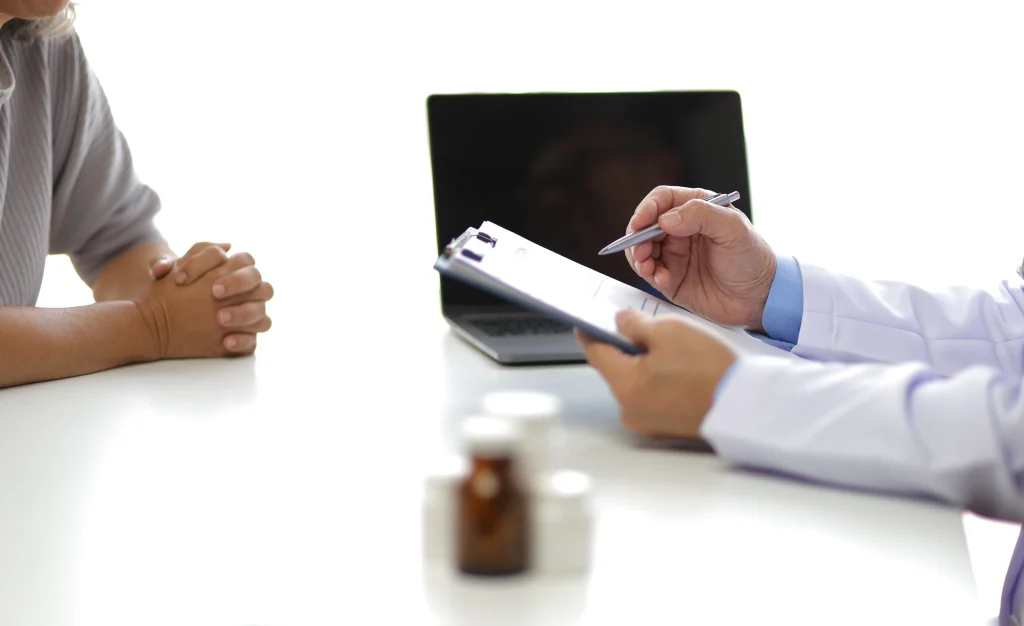
Most diagnoses start with talking, not testing. Your doctor will ask about:
- When your symptoms began and how often they happen
- Whether they wake you at night
- Blood or mucus in your stool
- Your family history (IBD, celiac disease, colon cancer)
- Your medications, especially NSAIDs like ibuprofen
A gentle physical exam follows. If these questions feel personal, that’s completely normal. Your doctor has heard it all, and every detail helps.
A small tip that helps a lot: keep a symptom and stool diary for a week or two before you go. What you ate and how you felt tell your doctor far more than memory can.
Red Flags That Change the Plan
Some answers point toward inflammation rather than IBS. These red flags include:
- Blood in the stool
- Iron-deficiency anemia (low iron on blood tests)
- Unexplained weight loss
- Fever
- Symptoms that wake you from sleep
- New bowel changes after age 50
IBS itself doesn’t cause these, so they always deserve a closer look, even if you suspect hemorrhoids. Please don’t wait it out. It simply means your doctor will look deeper, often with an earlier colonoscopy.
How IBS Is Actually Diagnosed
Many people believe IBS is simply what’s left after every other test comes back clean. It isn’t. Doctors look for a specific pattern (you may hear it called the Rome V criteria):
- Belly pain or discomfort that comes and goes, at least 3 days a month, over the last three months
- Symptoms tied to at least two of these: your bathroom habits (such as easing after a bowel movement), how often you go, or how your stool looks
- Symptoms that started at least six months before diagnosis
- Pain that isn’t constant every day (daily, nonstop pain points doctors toward other causes)
They count discomfort, not just pain, and they need symptoms on fewer days, so more people with milder symptoms can now get a clear IBS diagnosis.
Your doctor will also note whether diarrhea, constipation, or a mix is your main problem, because that shapes treatment.
If your pattern fits and there are no warning signs, your doctor can diagnose IBS directly, sometimes after a few simple tests to rule out other causes.
And if your colonoscopy or bloodwork comes back normal? That doesn’t mean it’s in your head. IBS is real. It just doesn’t leave visible damage behind, which is exactly why it can feel so frustrating.
Which Tests Tell IBS and IBD Apart?
Blood and stool tests do most of the sorting, and they’re simpler than most people expect. You don’t need to brace yourself.
A simple blood test
A blood count checks for anemia, which points away from IBS. A marker called CRP shows whether there’s inflammation in your body. Your doctor may also test for celiac disease, which often mimics IBS.
A stool test you do at home
Fecal calprotectin measures a protein released by inflamed gut tissue. You collect the sample at home, so there are no needles.
A low result (generally under about 50 µg/g) makes IBD unlikely. A high result (generally over about 250 µg/g) means your doctor will look closer. It isn’t a diagnosis on its own, since NSAIDs and infections can raise it too.
Colonoscopy with biopsies
If results suggest inflammation, a colonoscopy is usually next. Your doctor uses a small camera to view the colon and takes tiny tissue samples. Continuous inflammation points toward ulcerative colitis, and patchy inflammation points toward Crohn’s disease.
Scans for the small bowel
A colonoscopy can’t fully reach the small bowel. If Crohn’s disease is suspected there, doctors may use MR or CT scans, or a capsule camera you swallow.
What Else Could Be Going On, and How to Prepare
Doctors also rule out conditions that mimic both, such as SIBO (bacterial overgrowth in the small intestine), microscopic colitis, bile acid diarrhea, and infections. Colorectal cancer screening stays part of the picture too, and for average-risk adults it starts at 45.
It’s also possible to have IBS and IBD -type symptoms at the same time, so doctors check for inflammation before assuming a flare. IBD can go unrecognized for a long time when symptoms come and go, so if treatment isn’t helping or a new warning sign appears, asking for a second opinion is completely reasonable.
Before your appointment with GI Partners of Illinois, bring your symptom and food diary, a list of medications and supplements, your family history, and any earlier test results. Then ask: What are you ruling out? Do I need a calprotectin test or a colonoscopy?
Frequently Asked Questions
Can IBS turn into IBD?
No. IBS doesn’t develop into IBD, though the two can exist together, which is why testing matters.
What is the main difference between IBS and IBD?
IBS is a functional disorder, so the gut doesn’t work smoothly but the tissue looks healthy. IBD causes real inflammation that damages the bowel lining. That’s the core of IBS vs IBD, and it’s why IBD needs different tests and treatment.
Can you have IBS and IBD at the same time?
Yes. It’s possible to have IBS and IBD -type symptoms together, so doctors check for inflammation before assuming a flare. This is one reason testing matters.
Which tests tell IBS and IBD apart?
Blood tests (a blood count and CRP) and a stool test called fecal calprotectin do most of the sorting. If they suggest inflammation, a colonoscopy with biopsies is usually next. A normal result on these tests, with a symptom pattern that fits, points toward IBS.
You Don’t Have to Figure This Out Alone
Symptom checklists can’t tell IBS and IBD apart, and a wrong guess in either direction can cost you valuable time. If it’s been bothering you for weeks or months, a specialist can walk you through the right tests, one step at a time.
Book a consultation with GI Partners of Illinois and talk with a gastroenterologist in Chicago about your symptoms. You’ll leave with a clear plan, not more guesswork.
Medical disclaimer: This article is for general education only and is not medical advice. It does not replace a diagnosis or treatment plan from a qualified healthcare provider. If you have blood in your stool, severe abdominal pain, high fever or signs of dehydration, seek medical care right away or call 911 in an emergency.