A cancer diagnosis is one of the most terrifying things a person can hear. But here’s what we want you to know: when it comes to GI cancers, fear doesn’t have to be the whole story. Caught early, many of the most common gastrointestinal cancers are highly treatable, and in many cases, fully beatable. That’s not just optimism. That’s medicine.
We say this to our patients all the time, and we mean it every single time.
At GI Partners of Illinois, we’ve seen the difference that early action makes. We’ve seen patients walk out of follow-up appointments cancer-free because they didn’t wait. We’ve seen people who almost talked themselves out of scheduling that colonoscopy, and we’re so glad they didn’t. And we’ve seen firsthand how knowledge, paired with the right care team, changes outcomes in a very real way.
So today, we want to talk about five GI cancers that, yes, sound scary, but don’t have to be a death sentence when you catch them early.
1. Colorectal Cancer
Colorectal cancer is one of the most common GI cancers out there, and also one of the most preventable. That combination should feel encouraging. When detected at an early stage, the 5-year survival rate exceeds 90%. Over 90%! And yet so many people put off their colonoscopy because life gets busy, or because they’re nervous, or because they just don’t want to think about it.
We get it. Truly. But a colonoscopy isn’t just a diagnostic tool. It’s actually a preventive one. During the procedure, we can remove precancerous polyps before they ever become a problem. One appointment, and you’ve potentially just stopped cancer before it started. That’s kind of remarkable when you think about it.
Screening typically starts at age 45 for average-risk adults. If you have a family history of colorectal cancer or polyps, you may need to start earlier. Don’t guess. Just ask us.
2. Esophageal Cancer
Here’s one that doesn’t get talked about enough. Esophageal cancer is serious, and survival outcomes are much better when it’s diagnosed at an early, localized stage compared to when it’s already spread.
One of the biggest risk factors? Chronic acid reflux, also known as GERD. If you’ve been dealing with heartburn for years and brushing it off as a diet issue, it’s time to get it checked out. Persistent reflux can lead to a condition called Barrett’s esophagus, which can, over time, develop into esophageal cancer. It’s one of those GI cancers that starts with something as common as heartburn, which is exactly why we take GERD seriously. The good news is that Barrett’s esophagus is very manageable with regular monitoring and the right treatment plan.
If you’ve had acid reflux symptoms for more than five years, especially if you’re over 50, it’s worth a conversation with us. A simple endoscopy can give us a clear picture of what’s going on. Early eyes on the problem mean early options for you.
3. Stomach (Gastric) Cancer
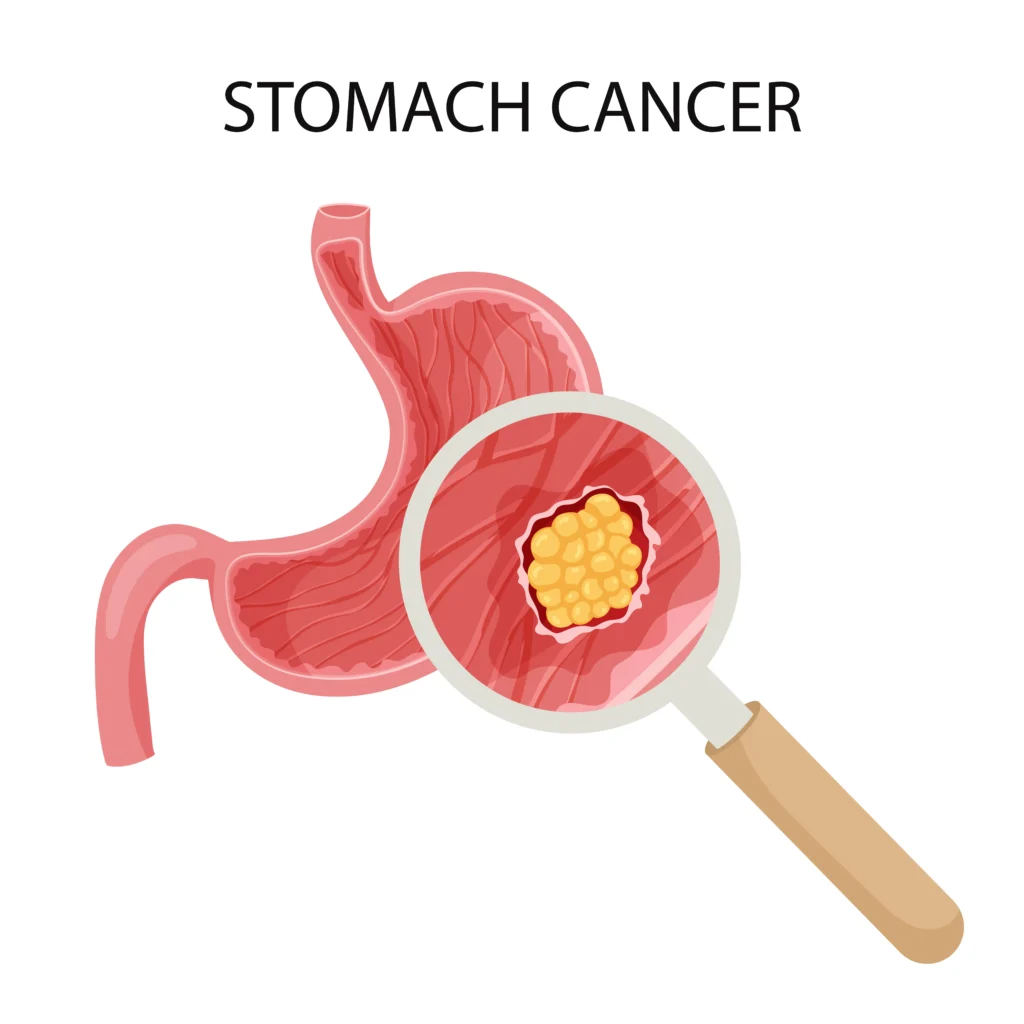
Stomach cancer is one of those GI cancers where early detection really changes the game. Early-stage gastric cancer, when confined to the stomach lining, has a survival rate that drops significantly once it spreads. Early-stage gastric cancer, when confined to the stomach lining, has a survival rate that drops significantly once it spreads. The gap between early and late diagnosis is wide, and that gap is the argument for not waiting.
Here’s the tricky part. Stomach cancer often doesn’t cause obvious symptoms in its early stages. Fatigue, a vague feeling of fullness, mild nausea, or occasional discomfort are easy to brush off. But if those symptoms persist, especially when paired with unexplained weight loss or difficulty eating, it’s time to get checked out.
H. pylori, a bacterial infection, is one of the most significant risk factors for gastric cancer. Many people carry it without knowing. It’s detectable. It’s treatable. And treating it early is one of the most straightforward ways to reduce your risk. If you’ve never been tested for H. pylori, it’s worth asking about.
4. Liver Cancer (Hepatocellular Carcinoma)
Liver cancer is one that we take very seriously, because outcomes really do hinge on how early it’s found. Early-stage liver cancer has treatment options that can include surgery, ablation, or even transplant in some cases. Advanced liver cancer is a much harder road.
The encouraging news is that most liver cancers develop in people who already have a known liver condition, which means regular monitoring can catch changes early. If you have cirrhosis, chronic hepatitis B or C, or non-alcoholic fatty liver disease (NAFLD), you should be on a surveillance schedule. Ultrasounds every six months are typically recommended for high-risk patients.
This is one of those areas where being “a known risk” is actually an advantage. You know to watch. You have a care team watching with you. That’s not a scary place to be. That’s an empowered one.
5. Pancreatic Cancer
We know this one carries a heavy reputation, and we’re not going to pretend otherwise. Pancreatic cancer has historically been difficult to treat because it’s so often caught late. But the story is changing, and we want you to know that.
When pancreatic cancer is found at a localized, early stage, surgical removal is possible, and survival outcomes are meaningfully better than for advanced disease. The challenge is that the pancreas sits deep in the abdomen, making early symptoms easy to miss. Jaundice, new-onset diabetes, unexplained back pain, or dramatic weight loss can all be signals worth bringing to your doctor.
High-risk individuals, including those with a strong family history of pancreatic cancer, certain genetic mutations like BRCA2, or a history of chronic pancreatitis, may qualify for specialized surveillance. If you think you might fall into a higher-risk group, talk to us. Knowing your risk is step one.
Knowledge Is Your Biggest Advantage
If there’s one thing we hope you take away from this, it’s that you’re not powerless against GI cancers. You’re not in this alone. There are options, screening tools, and a care team here that genuinely want to help you stay well, not just treat you when something’s already gone wrong.
A lot of patients tell us they were nervous to schedule an appointment because they were scared of what we might find. And we understand that completely. But we’d rather find something small and manageable than nothing at all, while something grows quietly. Early detection is a gift. Screening is how you give it to yourself.
Ready to Take That First Step? We’re Here.
Don’t sit on symptoms, skip a screening, or talk yourself out of making the call. Our team at GI Partners of Illinois is here to help you understand your risk, schedule the right screenings, and walk through every step with you.
Schedule your appointment today. Your gut health is worth showing up for, and so are you.